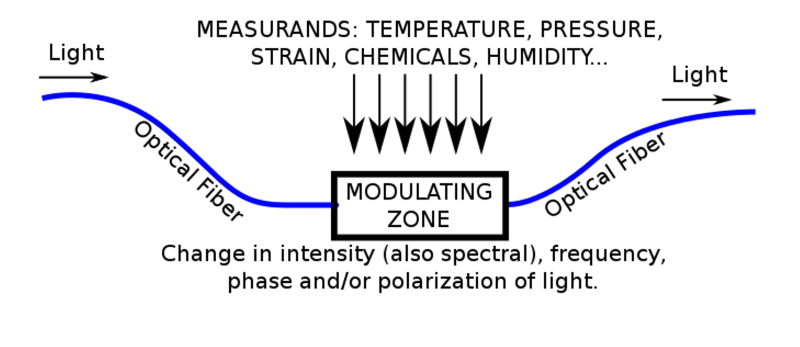
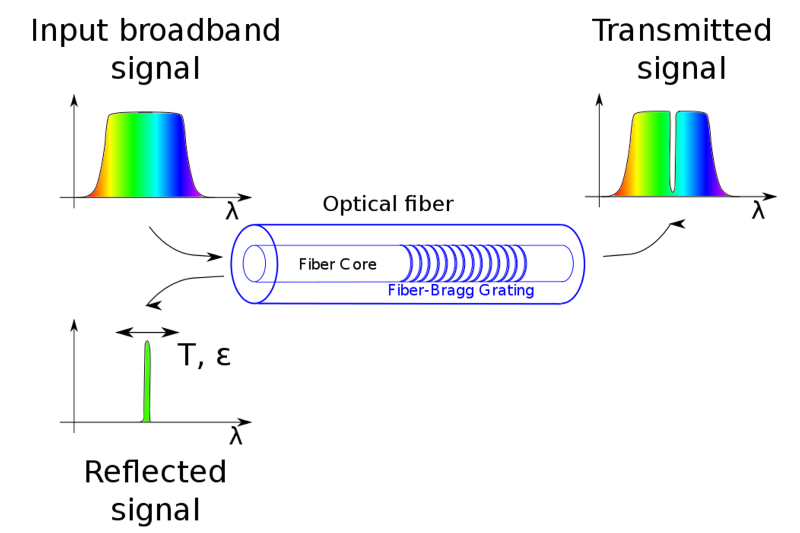
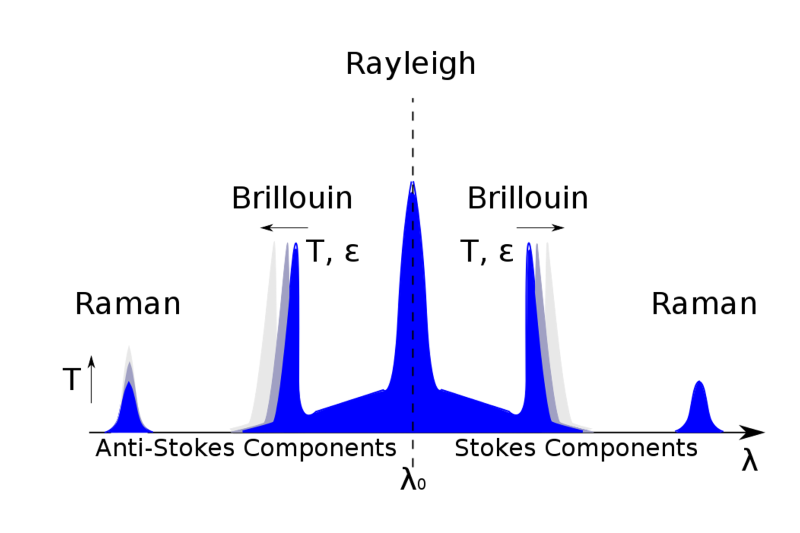
Optical fibres are generally aimed at large bandwidth transmission, and a few people know that the proposal of optical fibres as sensing elements is almost as old as their proposal as transmission media.
Over the last 25 years, fibre optic sensor technology has assumed a dominant role in several fields of applications. Fibre optic sensors (FOSs) offer several advantages compared to legacy electronic and mechanic sensors. FOSs are immune to electromagnetic interference and the sensing element is very cheap. FOS technology offers low operating cost, flexibility, multiplexing, reliability in harsh environments, long distance, large spatial coverage and spatial resolution as short as few centimetres. All these features make FOSs very attractive, in particular for applications where harshness, geographical extension or the required density of sensing points is very demanding. Geo-hydrological monitoring and structural health monitoring match very well the description.
Historically, the key driver for market penetration of FOSs was the monitoring demand from oil and gas industry, especially for offshore platforms. Nowadays, FOSs are proposed for almost any geophysics measurements, and some of them are commercially available.
We focus our research activities on the development of novel fibre optic sensors for physical parameters (e.g., temperature, pressure, strain) tailored to specific geological, hydrological, and structural applications.
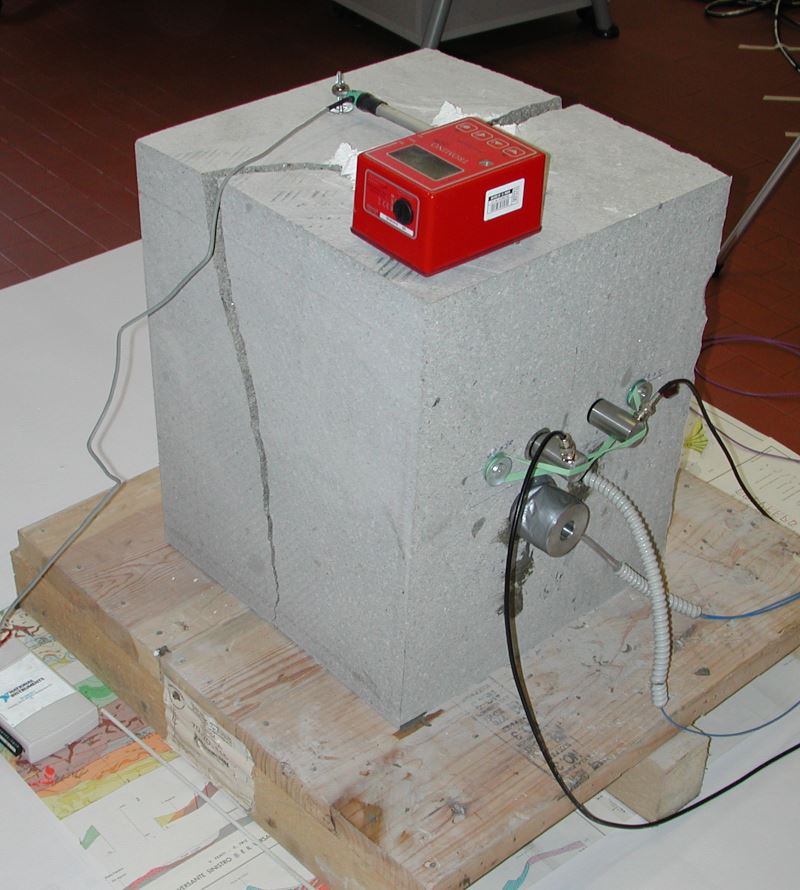
One of the problems we addressed was the detection of precursory signals in rock falls using measurements of the acoustic emissions from internal micro cracks originated in the rocks.
Another field of investigation is riverbank stability. FOSs enable continuous and distributed control of the physical parameters that control the stability of a riverbank. Basic research on the physical phenomenon of water filtration using advanced distributed optical sensing techniques applied to small scale soil models is currently carried out on small scale physical models. An intense activity is focused on technological development of novel FOSs (for pressure and temperature) to be used in riverbanks.
We also test existing FOSs in sites already instrumented with standard technology sensors, with the aim of proving the viability of the new technology and/or to overcome the limitations of the traditional systems. With this respect, we are an excellent interlocutor for companies in the FOSs market interested in technology transfer, at all technology readiness levels.
Horiuchi N. 2013. Rock-fall warning. Nature Photonics 7, 167. DOI: 10.1038/nphoton.2013.55.
Schenato L. et al., 2012. Fiber optic sensors for precursory acoustic signals detection in rockfall events. Journal of the European Optical Society 7.DOI: 10.2971/jeos.2012.12048.
Home » Focus » Optical Fibre Sensors for geo-hydrological and structural health monitoring applications