Preserving quality of scientific knowledge and information
How we can grant sustainability of the current systems of transfer of knowledge and information
Focus

Internal contact person: Massimo Arattano
Email: massimo.arattano@cnr.it

It is part of the mission of the Italian National Research Council, and consequently of our Institute, the task of producing new knowledge. This aim, fundamental to the social and cultural progress of our Country, needs to be accompanied by another, equally important, target: ensure that the quality of learning and knowledge already conquered, and the quality of its retransmission to future generations are properly preserved.
Are we sure we are able to accomplish this?
In recent years, with the advent of the Internet and the digital age, the possibilities for storage and transmission of knowledge have grown enormously, with a consequent increase in the availability of knowledge itself. Already in the mid 90’s the Nobel laureate Murray Gell-mann, in an essay entitled “Information versus knowledge and understanding”, denounced the danger of a deterioration of the quality of the available information that the Internet contributed to make more acute. According to Gell-Mann, “we hear much more about how to disseminate the available material and transfer it from one medium to another than about how to separate the wheat from the chaff and extract meaningful conclusions”.
Which remedies do we have to preserve the quality of information, especially scientific, and ensure the sustainability of the current systems of transfer of knowledge?
A few years ago, we started a research in geoethics aimed at identifying tools and didactic principles that could serve to enhance the expressive and communicative abilities of undergraduates who carried out their thesis in collaboration with our Institute. In conducting the research, we were inspired by the recommendations of Gell-mann, but also by the content of essays and articles on the subject of other eminent men of science, from Gustavo Colonnetti to Richard Feynman, Thomas Khun and Jean Piaget. We felt that a good way to ensure the preservation of the quality of knowledge was to improve the quality of expression of the young generation of graduates, enabling them to retransmit their knowledge with quality and to recognize and correct the bad information with which they eventually came in contact.
Over the years, we have identified a few fundamental educational principles, and developed original exercises that have proven particularly effective to achieve our scope.
Donwload attachment
Further details
Link to the abstracts “The ethical duty to preserve the quality of scientific information” »
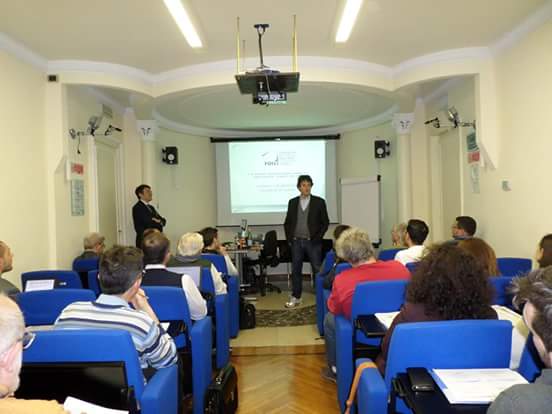
Link to the workshop “Imparare ad imparare” e “Saper comunicare” »